
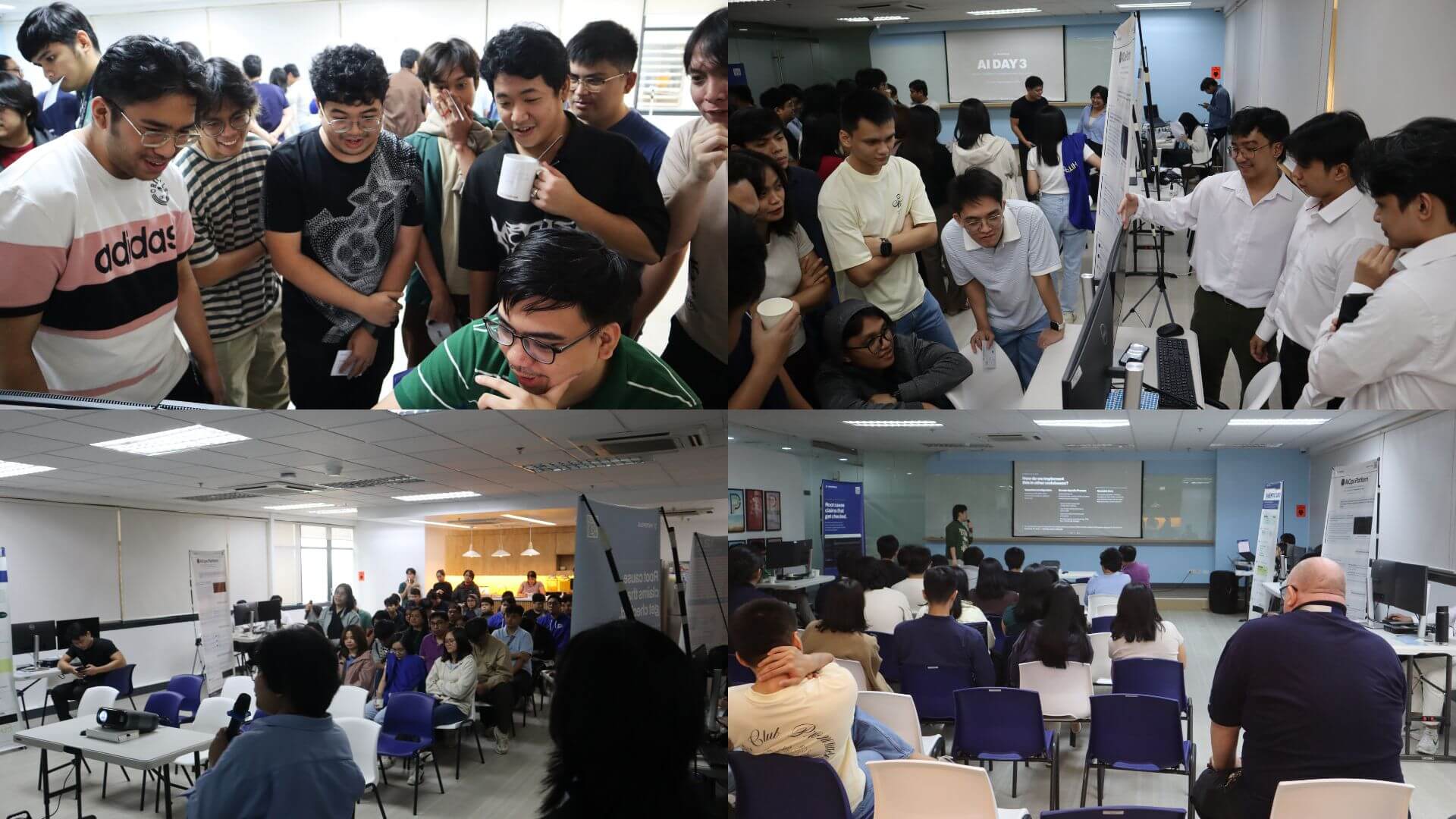
Phitopolis’s AI Day is built on a simple premise: this isn’t a day of watching; it’s a day of doing. AI Day 3 brought that to life with live demos, hands-on booths, and back-to-back presentations from four teams who are rewiring how they work with AI.
CTO Mark Walbaum opened the afternoon by framing the vision behind the event, and from there the day settled into its rhythm: a kickoff, booth exploration, and four 20-minute team sessions, each followed by a break and a walk around the floor. Four sessions, four projects, one theme: AI agents that don’t just answer questions, but check their own work, catch problems before they become tickets, and know when to hand things off to a human.
Let’s go through the highlights of what each team showed.
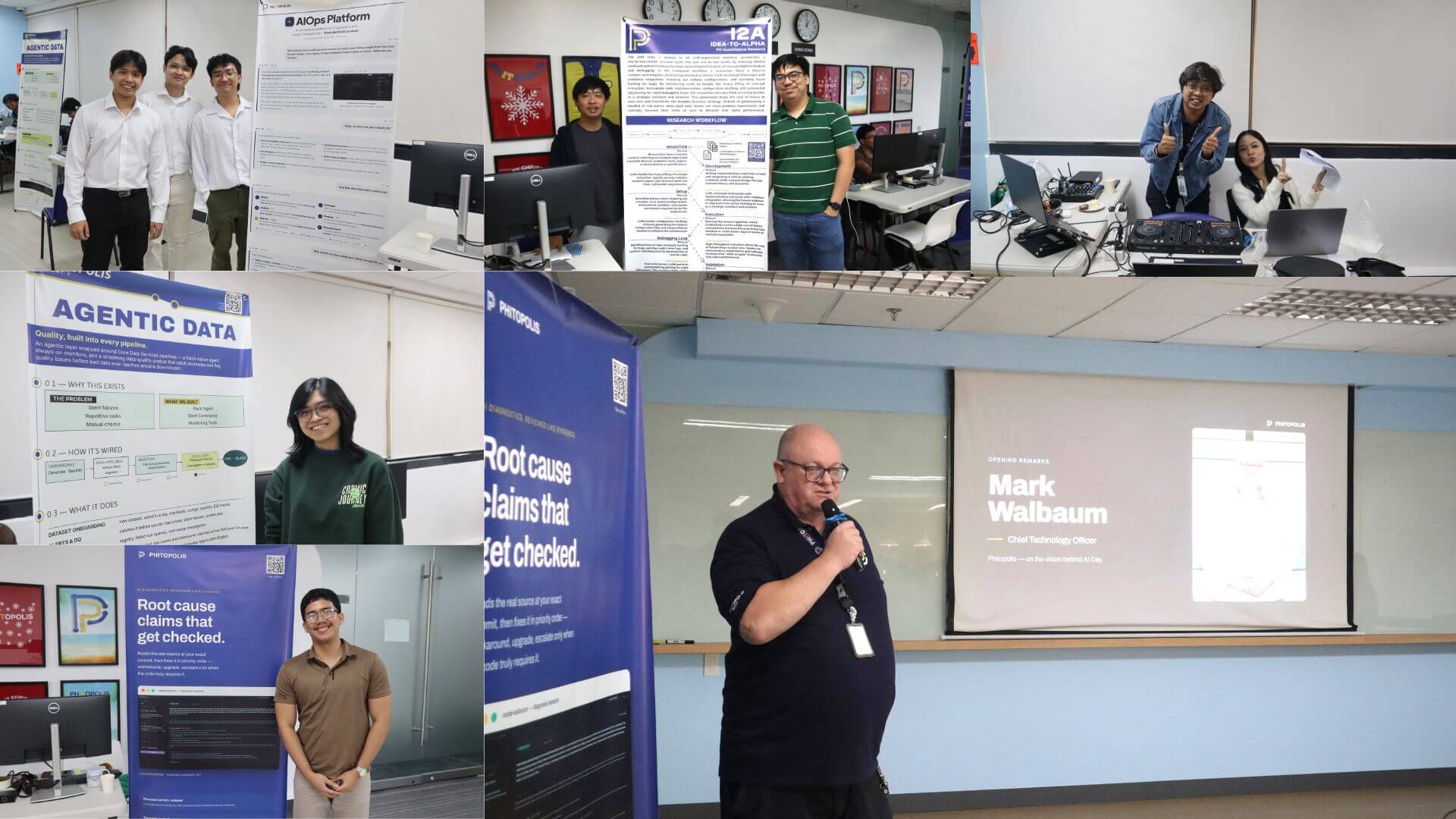
Data Science Team — Agentic Data Framework
The Data Science Team built a suite of tools to keep data trustworthy and pipelines healthy from end to end. Some tools catch bad or missing data before it spreads downstream, including one that hunts for pipelines that quietly fail while still reporting “success,” and another that finds stuck processes wasting compute in the background. Other tools make the whole system easier to understand — cataloging datasets and workflows, translating dense technical logs into plain English, and even having multiple AI models review each other’s outputs before anything goes live. They also built a system that automatically sets up and verifies new data sources from scratch.
Together, these tools reflect a shift toward AI that maintains systems, not just answers questions about them.
DevOps Team — AIOps Platform
The DevOps Team tackled the problem of issues slipping through the cracks between chat, monitoring, and ticketing tools. Their platform AIOps automatically turns real problems mentioned in Slack into properly filed tickets, merging duplicate reports into one instead of many. Another feature lets anyone ask a plain-language question about a server, like checking disk usage, and get a plain-language answer back without needing special technical access.
The system currently sticks to safe, read-only checks, with plans to eventually let the AI apply approved fixes on its own.
Quantitative Research Team — Idea-to-Alpha
The Quantitative Research Team focused on making it easier to turn academic research into practical, testable trading ideas through a careful two-phase process. The first phase identifies the key ideas, definitions, and requirements from a research paper, then checks whether they can be supported by the available data. It creates a structured implementation plan while flagging anything that is missing, unclear, or difficult to reproduce reliably. The second phase takes that vetted plan and turns it into an actual working test, preparing data and running checks designed to catch common research problems.
Across both phases, the process is designed to be careful rather than simply push forward. If an important step cannot be verified, it is flagged for review instead of relying on unsupported assumptions.
Software Engineering Team — L3 Diagnostic Engine
The Software Engineering Team closed out the day with a diagnostic tool that helps support engineers troubleshoot bugs tied to specific customer software versions. The tool was designed to avoid the common AI pitfall of confidently citing things that don’t exist. It instead locks onto the customer’s exact software version and double-checks every piece of evidence it cites against that real code, dropping anything that doesn’t hold up and lowering its own confidence accordingly. The whole process runs in a countable number of visible steps, giving engineers a transparent, step-by-step look at how the AI reached its conclusion rather than a black-box answer, so they can trust and verify it for themselves.
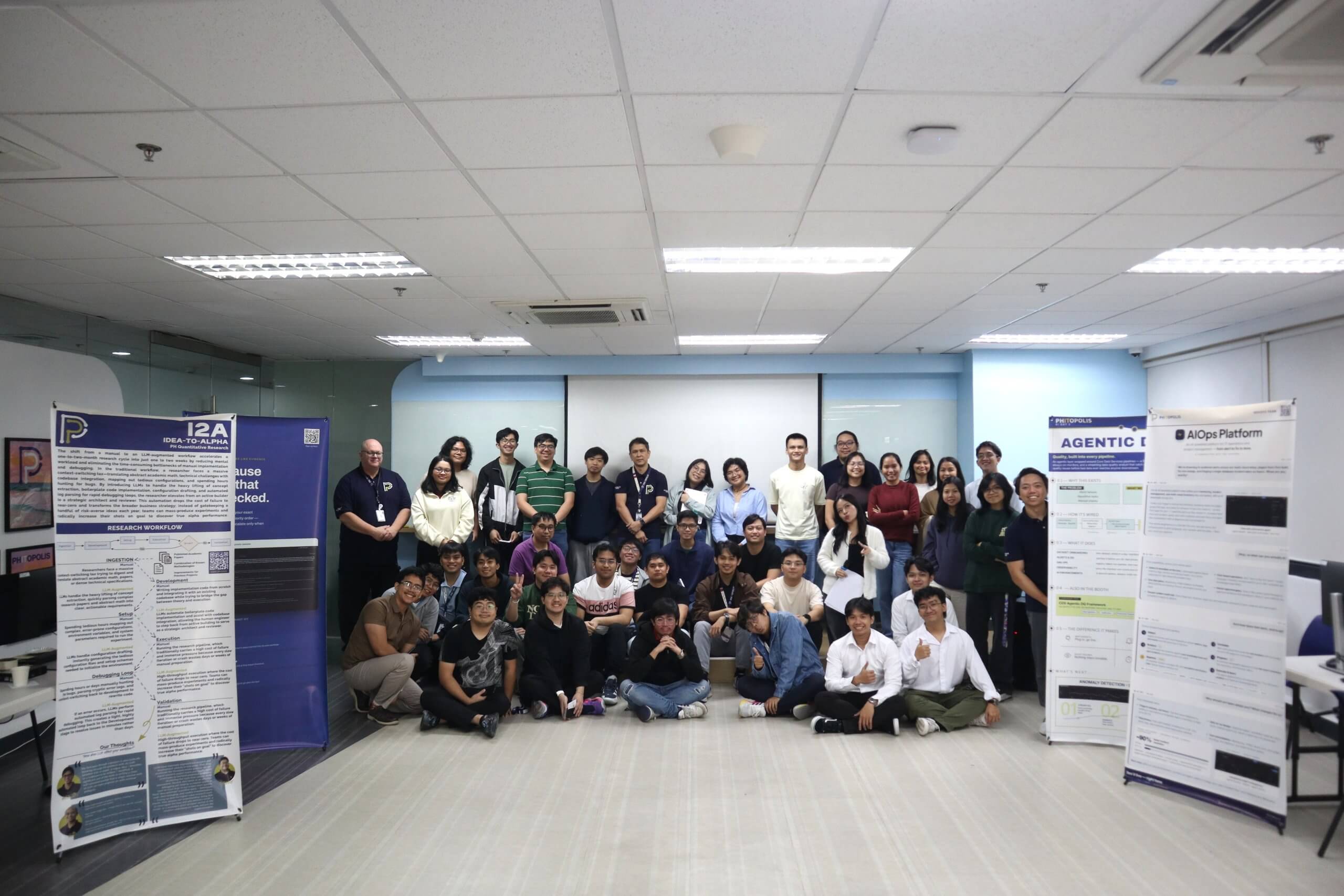
The day wrapped with closing remarks and a round of applause for all four presenting teams, the organizing committee, and the volunteers and technical staff who kept things running. We closed off the day with a call to action: keep learning, keep building, keep imagining. We’ll see you at the next AI Day.